warning: contains spoilers for the movie The Menu (2022).
In December 2023, I deleted my social media presence from apps including Instagram, Twitter, and YouTube, save a select few like Yelp and Strava. I had a (self-perceived) strong presence on Yelp, having achieved its 5 year ‘Elite gold-badge’ status along with a group of girlfriends from high school. Every week I made it a point to eat out somewhere new so I could review it on Yelp to maintain membership in this exclusive club.
Months later I watched The Menu, a dark comedy film littered with social commentary, and related a bit too much to the most hated character in the film, Tyler. Tyler’s character served as a critique of obsessive foodie culture: he was the type of person who placed culinary experiences on a pedestal without understanding or caring about the consequences.
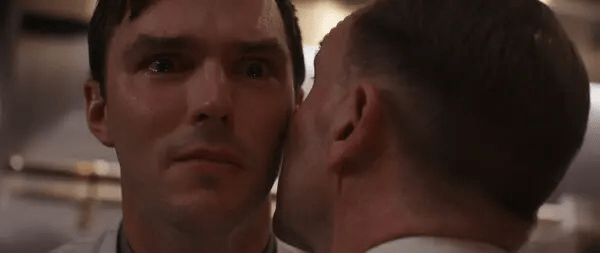
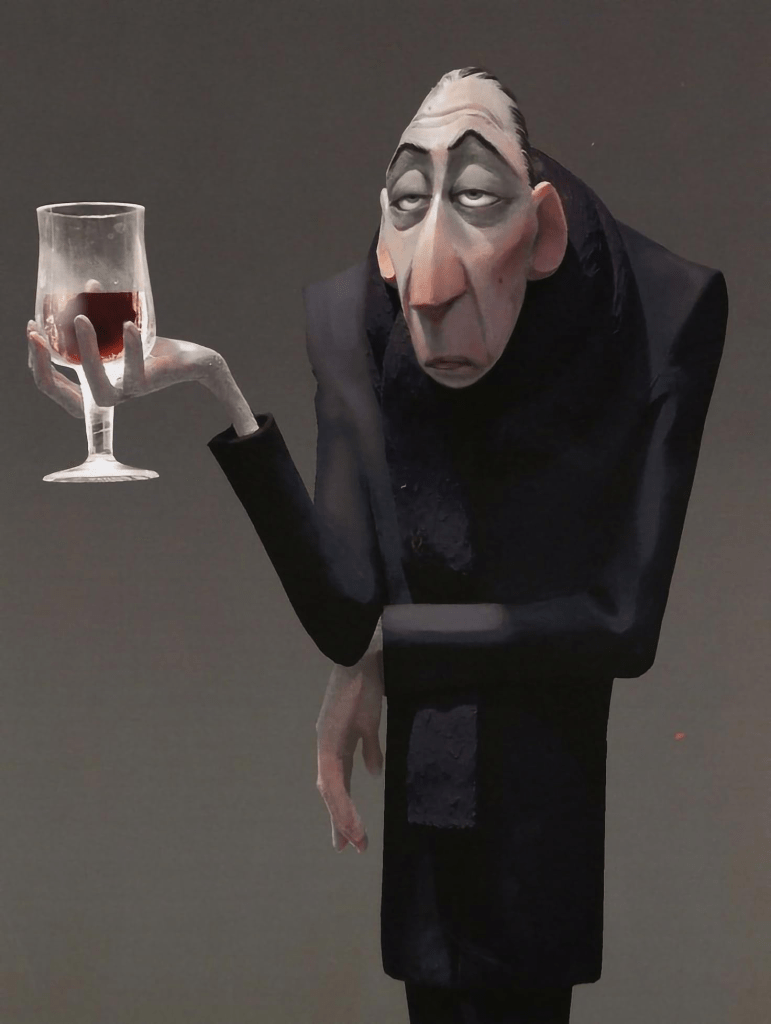
Tyler prided himself in being a discerning taster, considering himself to have the expertise of chefs despite being unable to cook. I saw myself in his elitism when it came to judging food, recognizing when I used to gloat that a highly reviewed place should just be 3-stars for XYZ reason, as if I were…
In 2022, I rated a restaurant in Hawaii 2-stars on Yelp because I was convinced I contracted food poisoning after having explosive diarrhea post-meal. The owner (yes, he was) proceeded to call, email, and text me at my personal number, imploring me to remove my review (I didn’t give out my personal number but he must’ve retrieved it from his online POS system). The experience is a bit of a core memory to this day, as I felt slightly harassed while simultaneously wondering if my review really had that much power to cost him so much business, to the point that he had to beg and threaten me to remove the review (even while having a 5 star average and 1000+ reviews).

I ended up updating the review to 3 stars without removing its original content, despite the owner attempting to guilt me into removing my review…

and realized that others were similarly harassed like I was. People sent me “compliments” on Yelp applauding me for calling out the behavior of the business owner as well, and similar reviews caught my attention where the owner Matthew harassed the customer and his family members for a good review.

And here is his text to my personal number…
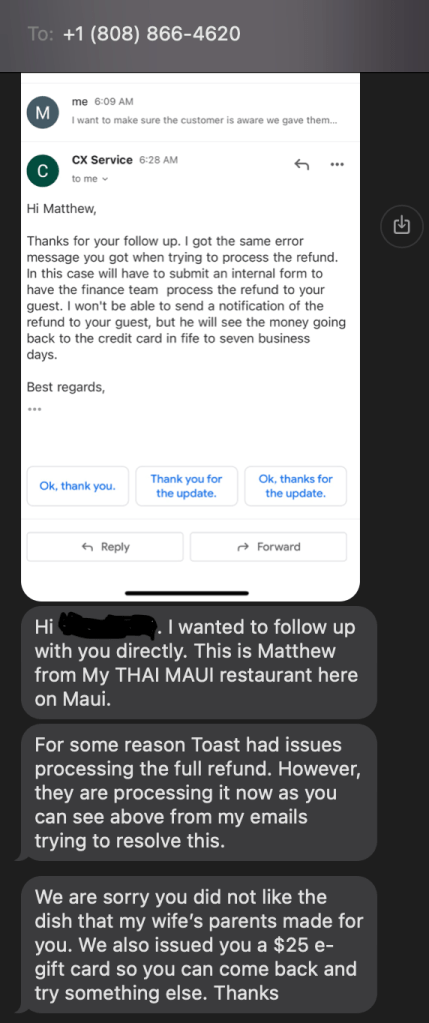
… which appeared to have good intentions, but imagine my surprise to be contacted on my personal cell by Matthew, a stranger, while I’m on vacation, continuing to guilt-trip me into feeling bad about disliking his “wife’s parents cooking.” I never asked for a refund, of course I am grateful for it, but I truly believe the most appropriate response would’ve been to just acknowledge the review and move on. There was no way I would ever disrupt my peace and enter that place again, even with a $25 credit just enough for 1 bowl of soup.
While my experience should not be representative of the entire restaurant industry, it is also not something that only happens to me. The following excerpt is from one of my galpals after I recounted this negative experience to her, also a Yelp Elite member going on 7 years:

Thus I deleted my Yelp account and the app altogether.
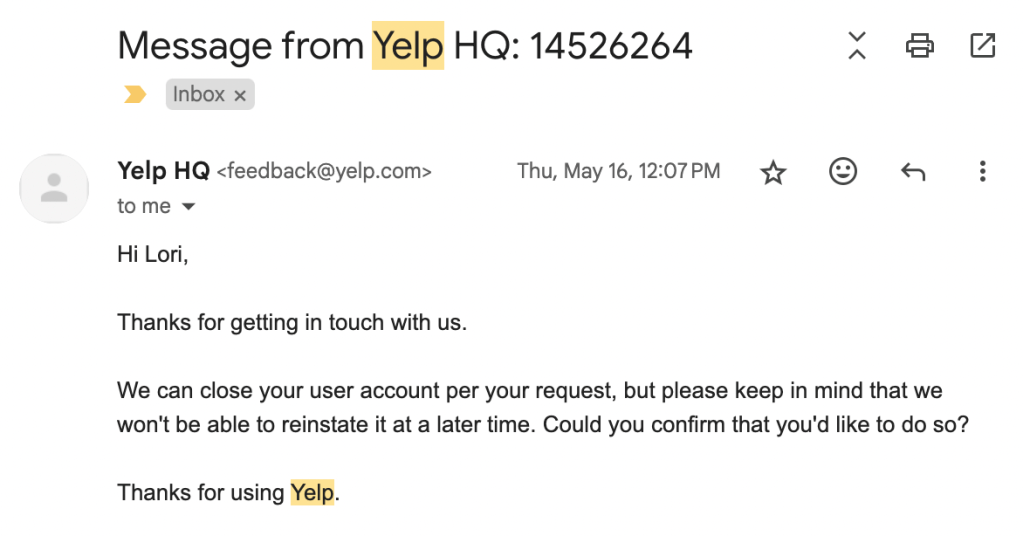
Which, lo and behold, was not an immediate process. It took a week of some back and forth before they actually removed my account and all its data.
All of this made me wonder: have Online Consumer Review (OCR) systems strayed from their original purpose? These systems were designed to let customers share feedback and opinions about products or services, building open and transparent connections between businesses and their patrons. However, heavy emphasis on positive reviews and their influence on customer retention has shifted priorities for many businesses.
| Pros | Cons |
| Customer trust and confidence | Negative impact from biased reviews |
| Free marketing | Fake reviews |
| Feedback for improvement | Short-term fixes |
| Competitive benchmarking | Pressure on staff |
In the restaurant industry, OCR has become more like a political game than a true reflection of quality. Success often hinges on savvy social media strategies and managing perceptions, rather than the actual dining experience.
…if you’re good in the game of getting high reviews or a lot of reviews, you can have a busier, better restaurant or better-running restaurant than an old skilled guy who doesn’t know anything about the Internet but can cook like the best, you know. His restaurant will lose to the restaurant with a good online presence.
Kim et al.
So it’s a necessary game you have to play, that’s the way I look at it. I don’t really necessarily like to ask my clients: ‘Please leave a good review.’ It’s not so nice to ask. It’s not something I particularly enjoy. We’d rather focus on good cooking and good service.
An online research poll conducted in 2009 of over 25,000 consumers from 50 countries revealed that 70% of consumers trust online opinions. Regulating the online consumer market proves difficult, however, due to a lack of legislation and free speech (inability to properly police misinformation). It is difficult to distinguish between an opinion vs. a factually incorrect statement.
There are ways to help reduce the negative impact of OCR, but they aren’t practical to implement across the board. Harvard Business Review published a piece by Geoff Donaker, Hyunjin Kim, and Michael Luca on designing better online review systems. Some suggestions included enforcing mandatory customer reviews (to prevent only extreme opinions from being shared), employing moderators (both staff and community members), and setting clear review guildlines.
I’ve personally lost faith in reviews and opt to cross reference businesses or products on various sites such as Reddit, Google, Yelp, etc. This isn’t as efficient, but it prevents me from overindulging in potentially biased platforms. I’d like to propose a website that consolidates reviews from all platforms, including a bias plausibility factor… in a similar fashion that Ground News provides news from various sources and ranks the reliability and left/right bias of each source.
All this goes to say, do your own research as best as you can, and don’t trust everything on the internet. Exercise as much free will as you can by staying informed, and try not to let fake reviews manipulate you into spending money!
 Science Indirect
Leave a comment